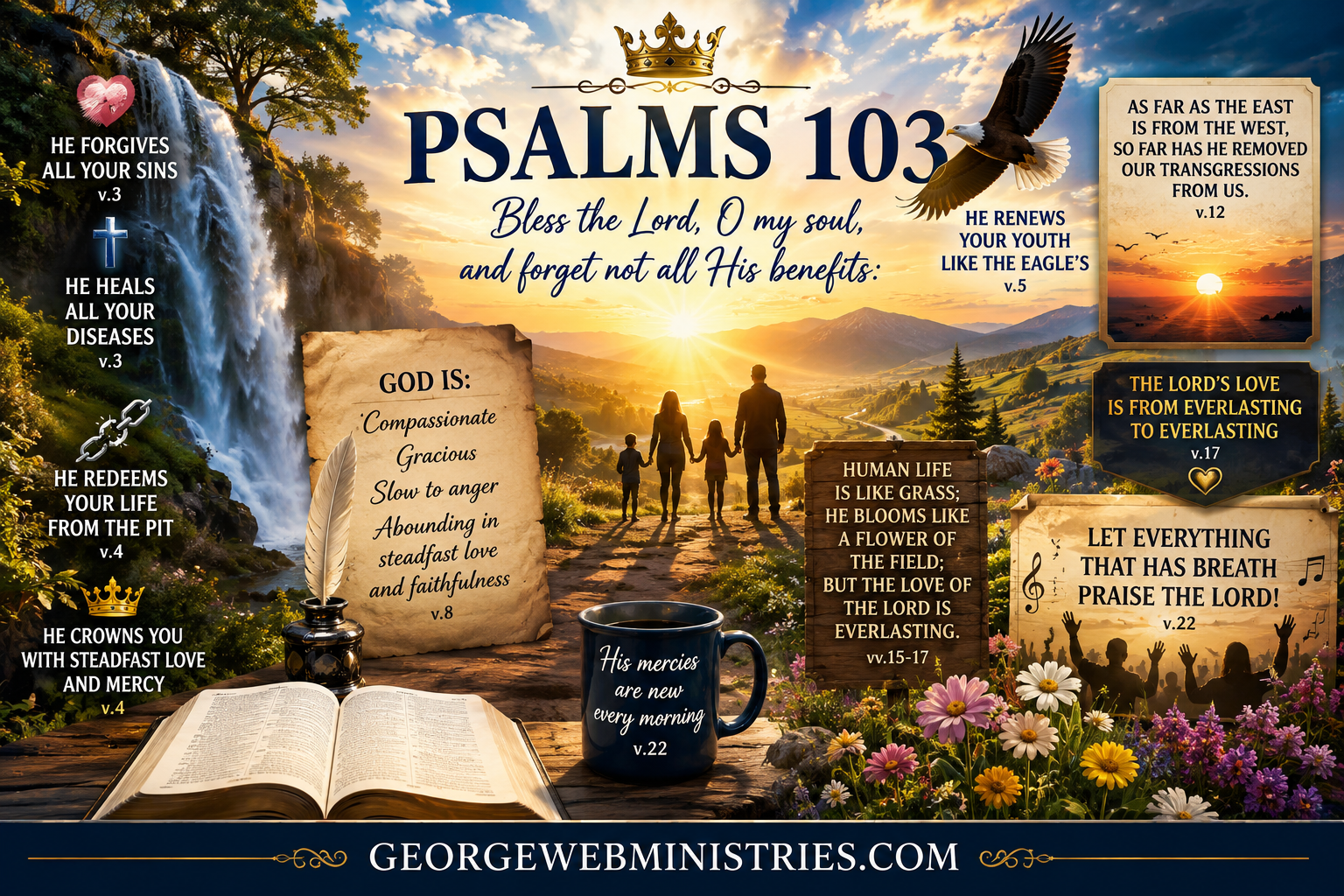

Psalm 103 Explained
Psalm 103 is a hymn of praise written by David. It celebrates God’s mercy, forgiveness, compassion, and everlasting love. Rather than asking God for help, it focuses on remembering and praising Him for who He is and what He has done.
Here’s a section-by-section explanation:
Verses 1–5: Remember God’s Benefits
“Bless the Lord, O my soul…”
David begins by speaking to himself, urging his whole being to praise God. He lists several reasons:
- Forgives all your sins – God offers complete forgiveness to those who repent.
- Heals all your diseases – This can refer to physical healing, spiritual restoration, or both.
- Redeems your life from the pit – God rescues people from destruction and despair.
- Crowns you with steadfast love and mercy – God’s love surrounds and honors His people.
- Satisfies you with good things – God provides what truly sustains life.
- Renews your youth like the eagle’s – A picture of renewed strength and vitality.
Key lesson: Gratitude grows when we intentionally remember God’s blessings.
Verses 6–10: God’s Justice and Mercy
David praises God because He:
- Defends those who are oppressed.
- Revealed His ways to Moses and the people of Israel.
- Is compassionate, gracious, patient, and full of faithful love.
Even though people sin, God does not treat them as their sins deserve.
Key lesson: God’s mercy is greater than His judgment for those who turn to Him.
Verses 11–14: The Greatness of God’s Love
These verses contain some of the Bible’s most comforting images:
- “As high as the heavens are above the earth…”
- God’s love is immeasurably great toward those who fear Him.
- “As far as the east is from the west…”
- God completely removes forgiven sin. East and west never meet, symbolizing total forgiveness.
- “As a father has compassion on his children…”
- God understands human weakness because He created us.
Key lesson: God’s forgiveness is complete, and His compassion is personal.
Verses 15–18: Human Life Is Temporary; God’s Love Is Eternal
David contrasts human life with God’s eternal faithfulness.
Humans are like:
- Grass
- Flowers that bloom briefly and then disappear
But God’s faithful love lasts forever for those who honour Him and keep His covenant.
Key lesson: Life is short, but God’s promises endure forever.
Verses 19–22: Universal Praise
The psalm ends by expanding from personal praise to cosmic praise.
David calls on:
- Angels
- Heavenly hosts
- All God’s works throughout creation
- Finally, his own soul once again
Everyone and everything under God’s rule is invited to praise Him.
Key lesson: Worship is not just personal—it is the proper response of all creation to God’s reign.
Main Themes of Psalm 103
- Remember God’s goodness.
- God forgives completely.
- God is compassionate and patient.
- Human life is brief, but God’s love is everlasting.
- All creation should praise the Lord.
A Simple Summary
Psalm 103 is a joyful reminder not to forget God’s kindness. It teaches that God forgives sin, heals and restores, shows deep compassion, understands human weakness, and loves His people with an everlasting love. David begins by calling himself to praise God and ends by inviting all of heaven and earth to join in that praise, emphasising that remembering God’s mercy naturally leads to worship.
GOD IS A GOOD GOD
GOD KNOWS, GOD LOVES, GOD CARES
Written for Georges Web Ministries.com
Georges WebMinistries. Com
Georges Bible Ministries
George Poem .com
Gi7Ministries.com
7th August 2016