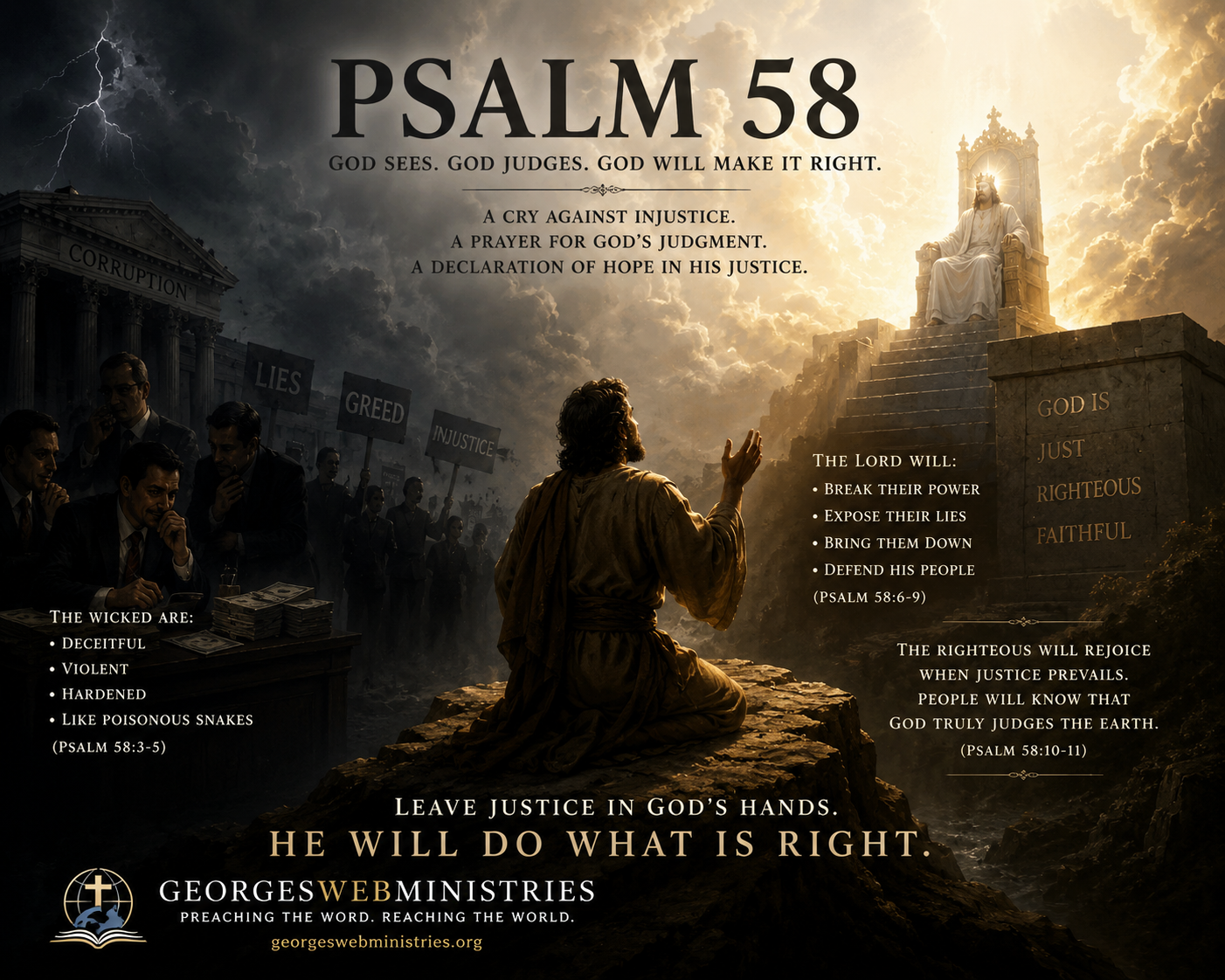

David's Prayer
Psalm 58 is one of the more intense psalms in the Bible. It’s often described as an imprecatory psalm—meaning it calls for God’s judgment against evil. Traditionally attributed to David, it wrestles with injustice, corruption, and the desire for divine justice.
Here’s a clear breakdown of its meaning:
1. Condemnation of Unjust Leaders (verses 1–2)
David begins by addressing rulers or judges who are supposed to uphold justice—but don’t.
- He challenges them: Are you really judging fairly?
- Instead, they plan injustice and act violently.
👉 The point: People in power are corrupt and abuse their authority.
2. The Nature of the Wicked (verses 3–5)
David describes the wicked as:
- Sinful from birth (a poetic way of saying deeply rooted in evil)
- Deceptive and dangerous
- Like a venomous snake that refuses to listen to charmers
👉 The imagery emphasizes how stubborn and resistant to correction evil people can be.
3. Prayer for God’s Judgment (verses 6–9)
This is the most striking section.
David asks God to:
- Break their teeth (symbol of power)
- Render them harmless
- Make them disappear quickly like water or melting wax
These are vivid, even harsh images—but they’re poetic expressions of a desire for evil to be stopped.
👉 The key idea: Not personal revenge, but a plea for God to neutralize destructive people.
4. Confidence in Justice (verses 10–11)
The psalm ends with a declaration:
- The righteous will rejoice when justice is done
- People will recognize that God truly judges the earth
👉 In other words: justice may seem delayed, but it will come.
Big Themes in Psalm 58
1. God cares about justice
Corrupt leadership and oppression are not ignored.
2. Evil can seem powerful—but it’s temporary
The psalm insists that wickedness will not ultimately prevail.
3. It’s okay to bring anger to God
Rather than acting violently, David directs his outrage into prayer.
How to Understand It Today
Psalm 58 can feel uncomfortable because of its strong language. But many readers see it as:
- A cry against injustice (especially when systems are broken)
- A reminder to trust God rather than seek revenge
- A voice for people who feel powerless in the face of wrongdoing
GOD IS A GOOD GOD
GOD KNOWS GOD LOVES GOD CARES
Written for georgeswebministries
1/06/ 2026