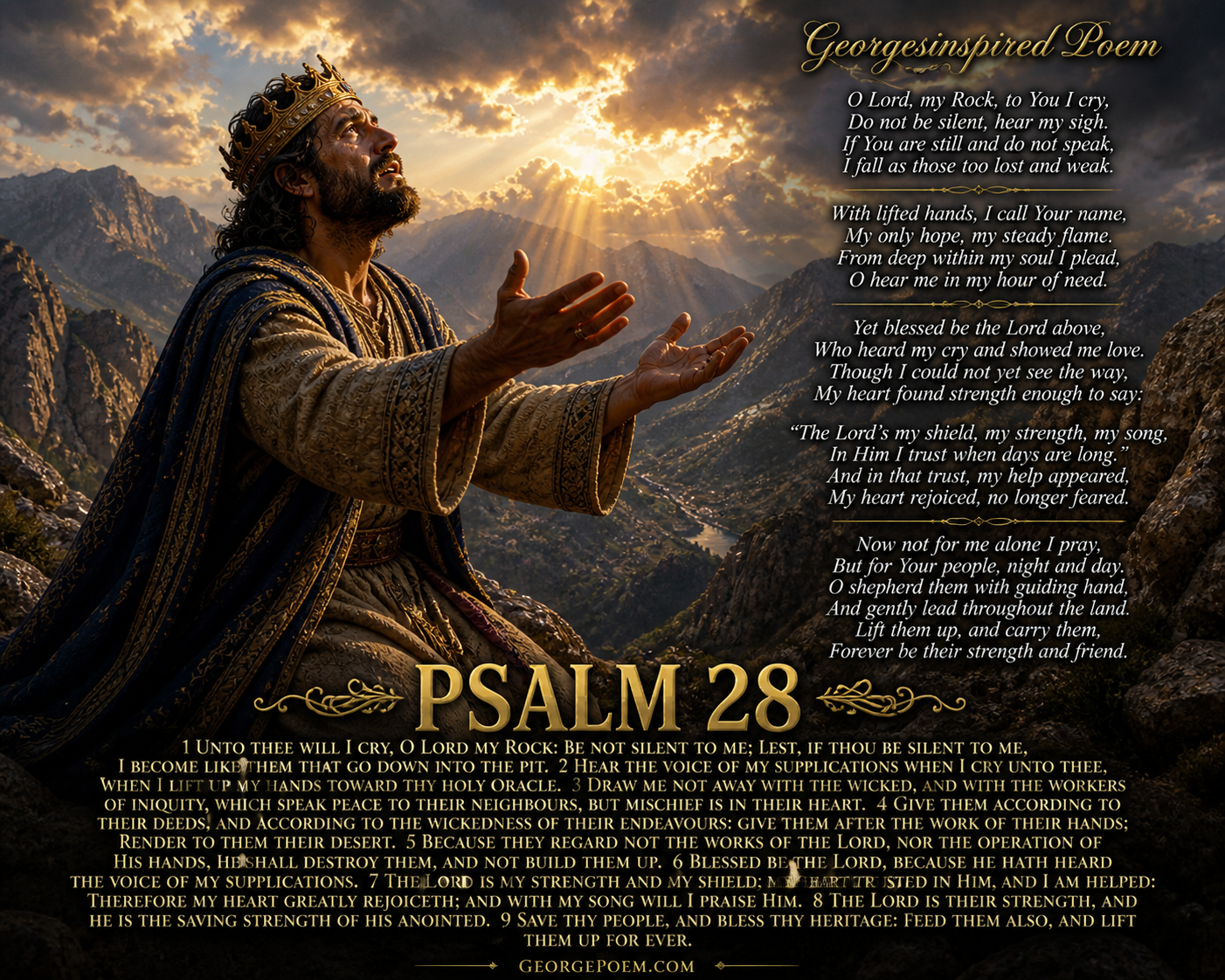

Psalm 28 -Explained
Psalm 28 is a prayer of David that moves from distress to confidence. It’s short, but it has a clear emotional progression—from crying out for help to praising God for deliverance.
Here’s a simple breakdown:
1. A Cry for Help (verses 1–2)
David begins by calling out urgently to God:
- He fears that if God stays silent, it will feel like death (“like those who go down to the pit”).
- He lifts his hands toward the “Most Holy Place,” showing dependence and worship.
Meaning:
This is raw, honest prayer. David is desperate and knows only God can help him.
2. A Plea for Justice (verses 3–5)
David asks God not to treat him like the wicked:
- He describes evildoers as people who speak peace but have evil in their hearts.
- He asks God to repay them according to their deeds.
- He notes that they ignore God’s works, so judgment is justified.
Meaning:
David is asking for moral justice. He trusts that God sees hypocrisy and will act rightly.
3. Praise for Answered Prayer (verses 6–7)
The tone suddenly shifts:
- David praises God for hearing him.
- He calls God his strength and shield.
- His heart trusts in God, and he is helped.
Meaning:
Even before the situation is fully resolved, David expresses faith that God has answered.
4. Prayer for the People (verses 8–9)
David expands his focus:
- God is not just his strength, but the strength of all His people.
- He asks God to save, bless, shepherd, and carry them forever.
Meaning:
The prayer becomes communal. David moves from personal need to concern for others.
Big Themes of Psalm 28
- God hears prayer, even when it feels like silence.
- Trust replaces fear when we rely on God.
- God is just—He sees both good and evil clearly.
- Faith leads to praise, even before outcomes are visible.
- Prayer grows outward—from personal need to caring for others.
GOD IS A GOOD GOD
GOD KNOWS GOD LOVES GOD CARES
WRITTEN FOR GEORGES WEB MINISTRIES
4th May April 2026