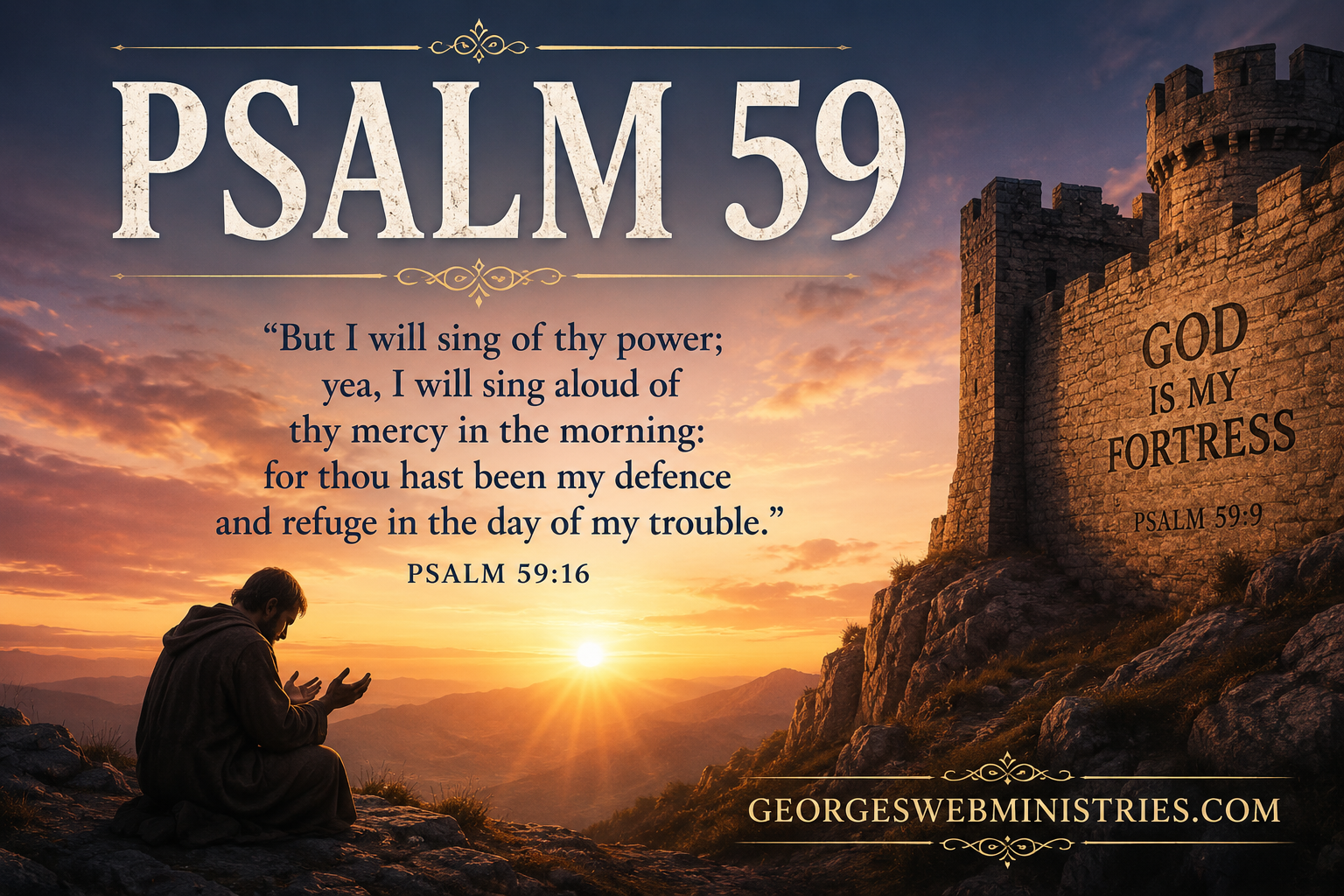

Explains Chapter Psalm 59
Psalm 59 is a prayer of David written during a time when King Saul sent men to watch David’s house in order to kill him (described in 1 Samuel 19). The psalm mixes fear, anger, trust, and confidence in God’s protection.
Here’s a simple breakdown:
Background
The heading says:
“When Saul sent men to watch David’s house in order to kill him.”
David is basically trapped. Enemies are outside waiting for a chance to attack. So this psalm is both a cry for help and a declaration of faith.
Main Themes
1. Cry for Deliverance (vv. 1–5)
David begins by asking God to rescue him from violent enemies.
He insists he hasn’t done wrong:
- “not for my transgression”
- “not for my sin”
This doesn’t mean David was perfect; it means he wasn’t guilty of the accusations against him.
The tone is urgent:
- “Deliver me”
- “Protect me”
- “Awake to help me”
David feels hunted and unfairly attacked.
2. Description of the Enemies (vv. 6–7)
David compares his enemies to wild dogs prowling at night:
- snarling
- circling the city
- threatening violence
The imagery is intense and almost animal-like. It paints evil as restless and predatory.
They think nobody sees or judges them:
“Who hears us?”
But David knows God does hear.
3. God Laughs at Evil (vv. 8–10)
This is a turning point.
Instead of panicking, David says God laughs at the nations and wicked people. Not because suffering is funny, but because human rebellion cannot overpower God.
David shifts from fear to confidence:
“God is my fortress.”
That phrase repeats throughout the psalm. God becomes David’s safe place when everything else feels unsafe.
4. Justice and Warning (vv. 11–15)
David asks God not only to defeat the wicked but also to expose them so others learn from it.
This section can feel harsh because David speaks about judgment strongly. In the Psalms, this is common — oppressed people crying out for justice against violence and betrayal.
The “dogs” image returns:
- wandering hungry
- never satisfied
It symbolises the emptiness of wickedness.
5. Ending in Worship (vv. 16–17)
The psalm ends very differently from how it started.
David begins in danger, but ends singing:
“I will sing of your strength.”
Even before the situation changes, his confidence changes.
Final message:
- God sees injustice
- God protects the faithful
- Fear can turn into worship
- Trust in God is stronger than enemies
Key Verse
One of the most quoted lines is:
“But I will sing of your power; yes, I will sing aloud of your mercy in the morning.” (Psalm 59:16)
It captures the heart of the psalm:
night of danger → morning of hope.
Big Picture Meaning
Psalm 59 speaks to anyone who:
- feels falsely accused
- feels surrounded by hostility
- fears betrayal or attack
- needs reassurance that evil will not win
It teaches that believers can honestly pour out fear and anger to God while still holding onto trust and praise.
God is a good God.
God knows, God loves, God cares.
Written for Georgeswebministries.com
3rd June 2026