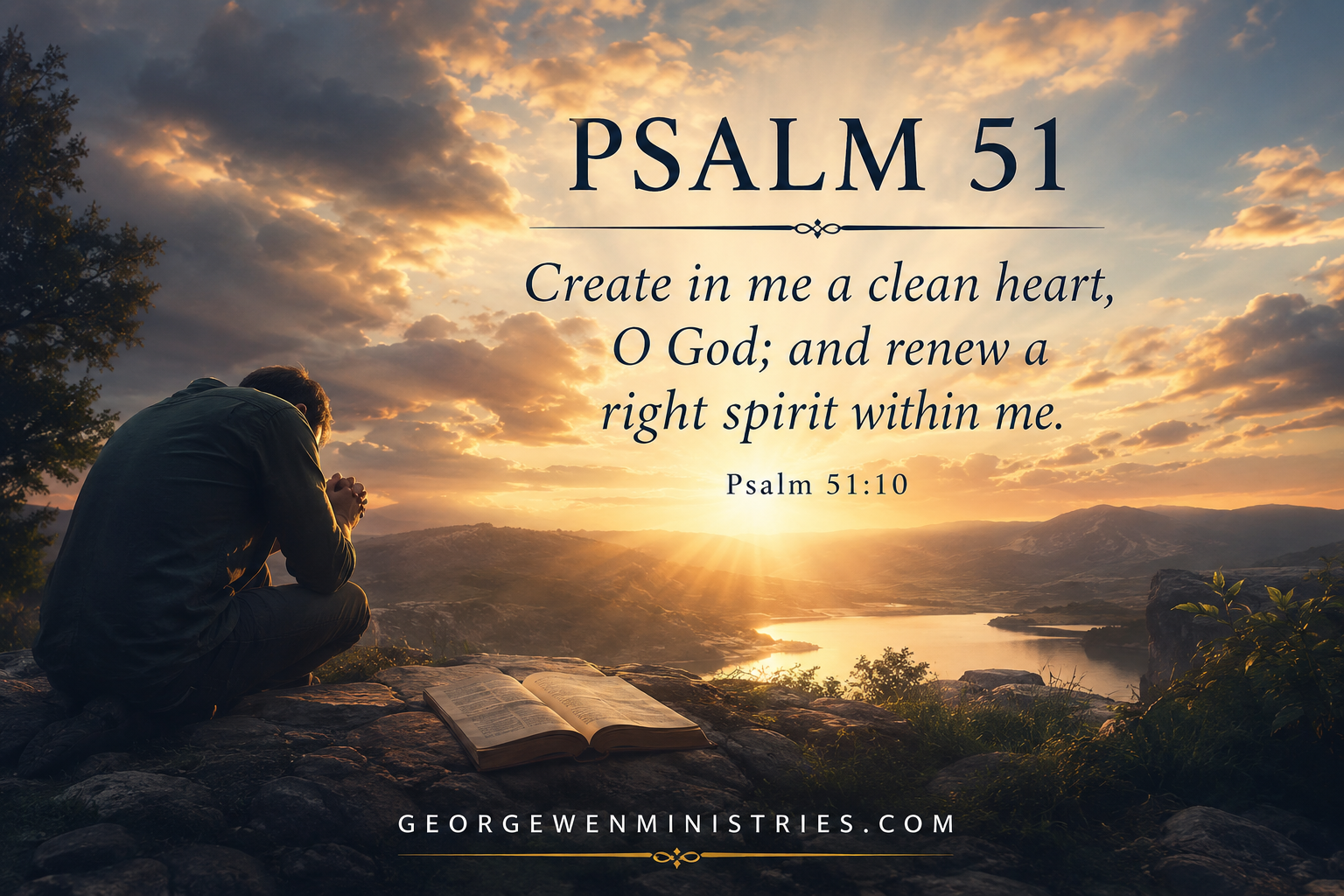


Explains - Psalm 51
Psalm 51 (from the Bible) is one of the most famous prayers of repentance. It’s traditionally attributed to King David after the prophet Nathan confronted him about his sin with Bathsheba (see 2 Samuel 11–12). The psalm expresses deep remorse, a plea for forgiveness, and a desire for inner transformation.
Here’s a clear breakdown of its meaning:
1.
A Plea for Mercy (verses 1–2)
David begins by appealing to God’s character—mercy, steadfast love, and compassion.
He doesn’t try to justify himself; instead, he asks God to “blot out” and “wash away” his sin.
Key idea: Forgiveness depends on God’s grace, not human merit.
2.
Honest Confession (verses 3–6)
David openly admits his wrongdoing:
- “My sin is always before me”
- “Against you, you only, have I sinned”
He recognises that sin is ultimately against God, even when it harms others. He also acknowledges that sin is part of human nature (“sinful from birth”).
Key idea: True repentance requires honesty and taking responsibility.
3.
Desire for Cleansing and Renewal (verses 7–12)
This is the heart of the psalm:
- “Cleanse me… and I will be clean”
- “Create in me a pure heart”
- “Renew a steadfast spirit within me”
David isn’t just asking for forgiveness—he wants to be changed from the inside out. He also fears losing God’s presence.
Key idea: Repentance is not just regret; it’s a longing for transformation.
4.
Commitment to Change (verses 13–17)
David promises that once restored:
- He will teach others God’s ways
- He will praise God openly
He also makes a powerful statement:
“The sacrifices of God are a broken spirit; a broken and contrite heart”
This means God values sincere humility more than religious rituals.
Key idea: Genuine repentance leads to a changed life and humility.
5.
Prayer for Restoration (verses 18–19)
The psalm ends with a broader concern for the community (Zion/Jerusalem), asking God to restore and bless it.
Key idea: Personal repentance connects to the well-being of the larger community.
In simple terms
Psalm 51 is about:
- Admitting wrongdoing without excuses
- Asking God for forgiveness
- Seeking inner renewal, not just outward pardon
- Living differently afterward
- God is a good God.
- God knows, God loves, God cares.
- Written for Georgeswebministries.com
- 25 May 2026