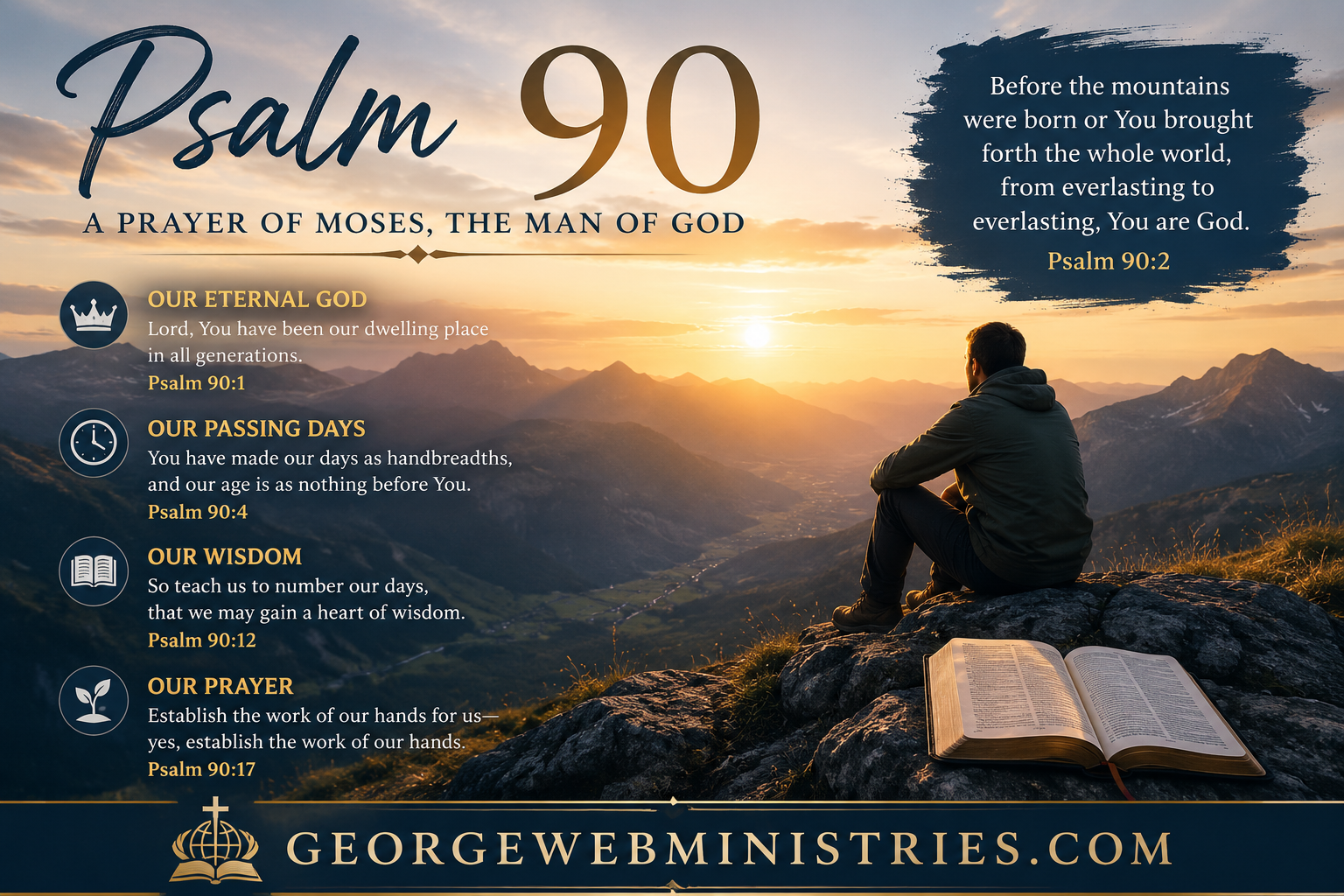

Psalm 90 is a profound prayer about God’s eternity, the brevity of human life, and the wisdom that comes from living in light of both. It is the only psalm attributed to Moses, making it one of the oldest compositions in the Book of Psalms.
Here’s a breakdown of its main themes:
1. God Is Eternal (Verses 1–2)
“Lord, you have been our dwelling place throughout all generations.”
The psalm begins by contrasting God’s eternal nature with humanity’s temporary existence:
- God has always existed—before the mountains were formed or the earth was created.
- He is the secure refuge (“dwelling place”) for His people in every generation.
Key lesson: Our security is found in the eternal God, not in temporary circumstances.
2. Human Life Is Short (Verses 3–6)
Moses describes human life as:
- Dust that returns to the earth.
- Like a dream that fades.
- Like grass that sprouts in the morning but withers by evening.
This reminds us that compared to God’s eternity, even a long human life is brief.
Key lesson: Life is precious because it is short.
3. Sin and God’s Judgment (Verses 7–11)
Moses explains that death is not merely natural—it is connected with humanity’s sin.
- God’s holiness exposes even hidden sins.
- Human lives are lived under the reality of God’s justice.
- Verse 10 notes that most people live about seventy or eighty years, and even those years contain labor and sorrow.
This section is sober but realistic: sin has consequences, and life is fragile.
4. The Prayer for Wisdom (Verse 12)
This is the most famous verse:
“Teach us to number our days, that we may gain a heart of wisdom.”
“Number our days” doesn’t mean counting them literally. It means living with the awareness that life is limited, so we:
- prioritize what truly matters,
- seek God,
- invest in eternal things,
- avoid wasting our lives.
Biblical wisdom begins by seeing life from God’s perspective.
5. A Prayer for Mercy and Joy (Verses 13–17)
The tone shifts from lament to hope.
Moses asks God to:
- Have compassion on His servants.
- Satisfy them with His unfailing love.
- Replace years of suffering with joy.
- Let future generations see God’s power.
- Establish the work of their hands.
The psalm ends with a beautiful prayer:
“Establish the work of our hands.”
This means asking God to make our lives meaningful and to give lasting value to what we do.
Main Message
Psalm 90 teaches that:
- God is eternal.
- Human life is short and affected by sin.
- Wisdom comes from living with eternity in view.
- God’s mercy gives meaning, joy, and purpose despite life’s brevity.
A Practical Application
Psalm 90 invites us to ask ourselves:
- Am I spending my limited time on what truly matters?
- Am I relying on God as my lasting refuge?
- Am I seeking wisdom rather than merely accumulating years?
- Am I asking God to make my work and life count for His purposes?
Many people consider verse 12 to be the heart of the psalm: recognising the brevity of life is not meant to produce fear but wisdom—a life lived intentionally, in dependence on God, with hope that He can give eternal significance to our brief years.
GOD IS A GOOD GOD
GOD KNOWS, GOD LOVES, GOD CARES
Written for Georges Web Ministries.com
Georges WebMinistries. Com
George Poem .com
6th July 2026