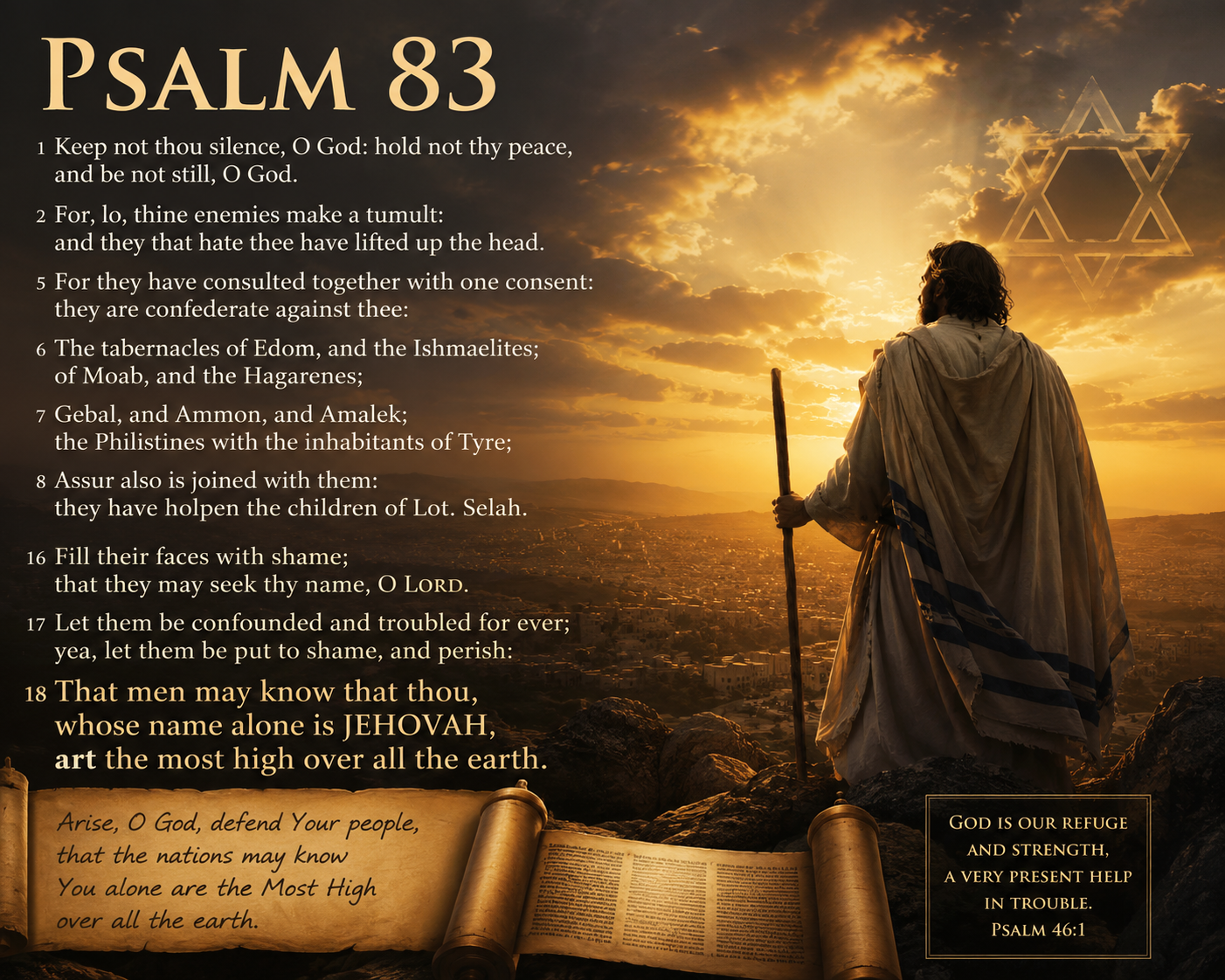

Psalm 83 is a prayer in which the psalmist asks God to intervene against a coalition of nations that are threatening Israel. It is attributed to Asaph and is both a lament and an appeal for divine justice.
Main Themes of Psalm 83
1. A Cry for God to Act (Verses 1–4)
The psalm begins with an urgent plea:
“O God, do not keep silence…”
The writer feels that God’s people are under attack and asks God not to remain passive. Israel’s enemies are plotting to destroy the nation and erase its identity.
2. The Alliance Against Israel (Verses 5–8)
A number of neighbouring peoples are listed, including Edom, Moab, Ammon, Philistia, Tyre, and Assyria. The psalm portrays them as united in opposition to God’s people.
The emphasis is not merely political hostility but opposition to those whom God has chosen.
3. Remembering God’s Past Deliverance (Verses 9–12)
The psalmist recalls earlier victories God gave Israel over enemies such as:
- Midian
- Sisera
- Jabin
These historical examples serve as a basis for confidence that God can act again.
4. Judgment with a Purpose (Verses 13–18)
The psalm asks God to scatter and defeat the enemies. However, the ultimate goal is not simply revenge. The climax comes in verses 16–18:
“…that they may seek Your name, O LORD.”
The psalmist desires that the nations recognise God’s sovereignty. God’s judgment is portrayed as leading people to acknowledge Him.
Key Verse
Psalm 83:18 summarises the psalm’s central message:
“That they may know that You alone, whose name is the LORD, are the Most High over all the earth.”
This shows that the psalm is ultimately about God’s universal rule, not merely Israel’s survival.
Different Interpretations
Historical View:
Most scholars see Psalm 83 as referring to threats Israel faced from surrounding nations in the ancient Near East.
Prophetic/End-Times View:
Some modern interpreters, especially in certain evangelical circles, see Psalm 83 as foreshadowing future conflicts involving Israel. However, this interpretation is debated and is not the traditional scholarly consensus.
Practical Application
For many believers, Psalm 83 teaches:
- Bringing fears and threats honestly to God.
- Trusting God’s power when facing opposition.
- Remembering God’s faithfulness in the past.
- Seeking not only justice but also that others come to know God.
In summary, Psalm 83 is a passionate prayer for God’s intervention against hostile nations, ending with the hope that all people will recognise Him as the supreme ruler of the earth.
GOD IS A GOOD GOD
GOD KNOWS, GOD LOVES, GOD CARES
Written for georgeswebministries
27rd June 2026